Table of Content
Black-owned businesses generated $249 billion...
● Black-owned businesses generated $249 billion in revenue in 2023, yet capture only 1% of total U.S. business revenue.
● The number of Black-owned employer firms grew nearly 60% between 2017 and 2023 almost eight times the growth rate of U.S. businesses overall.
● Repeat customers not one-time purchases are what actually help these businesses grow, hire, and build lasting value.
● Financing remains the biggest structural barrier: Black-owned firms are approved for full financing at roughly half the rate of white-owned firms.
● You can support Black-owned brands through buying, referrals, reviews, mentorship, and professional partnerships not shopping alone.
The Growing Presence of Black-Owned Products in Everyday Life
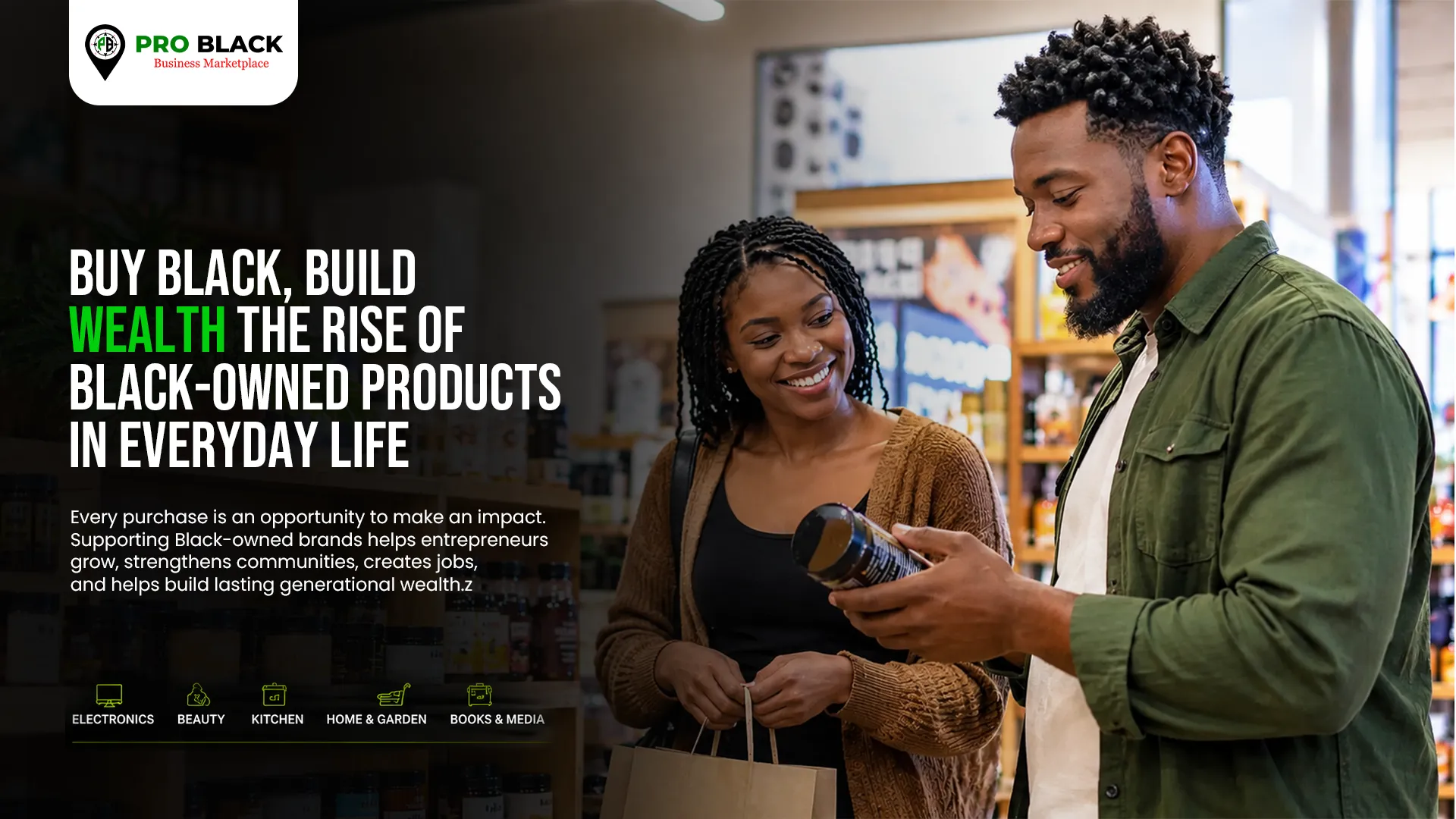
A decade ago, finding a Black-owned skincare line, coffee brand, or clothing label often meant relying on word of mouth or a local farmers market. Today, Black-owned products sit on the shelves of major national retailers, appear in mainstream advertising, and show up in algorithm-driven social feeds alongside every other consumer brand.
How Retail and E-Commerce Changed the Landscape
Major retailers have built this shift into their business models. Target runs a dedicated "Black Beyond Measure" shop. Macy's includes a permanent "Black-Owned" filter across its online store. Sephora and Ulta both highlight Black-owned beauty brands through in-store signage and curated online collections. Etsy tags Black-owned sellers directly in search results. These aren't one-off diversity campaigns they're now standard features of how these retailers organize inventory and merchandising.
E-commerce accelerated this trend even further. A founder no longer needs a storefront, a wholesale distribution deal, or a marketing budget to reach customers. A Shopify store, an Instagram account, and a reliable shipping process are often enough to start selling nationally. That accessibility has allowed thousands of small Black-owned brands to build direct relationships with customers who might never have discovered them through traditional retail.
The Role of Social Media and Awareness
Social media played a particularly important role in this shift. Platforms built around video and storytelling gave founders a way to explain who they are, why they started their business, and what makes their product different without paying for traditional advertising. A founder can show how a product is made, introduce their team, and respond directly to customer questions. That transparency builds trust in a way that a shelf display never could.
At the same time, growing public awareness of the financing and revenue gaps Black entrepreneurs face has pushed more consumers to seek these businesses out intentionally, rather than discovering them by accident. Awareness alone doesn't solve those structural gaps, but it has clearly shifted purchasing behavior Black-owned businesses have grown at nearly eight times the rate of U.S. businesses overall since 2017, according to Census Bureau data.
The result is a marketplace where Black-owned products are no longer confined to a single shopping season or a single category. They show up in beauty routines, weekday lunches, closets, bookshelves, and software subscriptions as a regular part of everyday consumption, not a once-a-year gesture.
What Does "Buying Black" Mean?
Buying Black means intentionally choosing to purchase goods and services from Black-owned businesses without sacrificing quality, price, or value. It's not about buying something just because of who owns it. It's about actively looking for a Black-owned option first when you already need a product or service you were going to buy anyway.
This distinction matters. A consumer movement built entirely on obligation tends to be short-lived. A consumer movement built on genuinely useful products, competitive pricing, and real customer satisfaction tends to be durable because it creates repeat customers, not just one-time transactions.
Symbolic Support vs. Sustainable Support
There's an important difference between two types of support:
Symbolic support looks like a single purchase made during a heritage month, a shared social media post, or a one-time gesture of solidarity. It raises visibility, but it doesn't necessarily create the kind of steady revenue a business needs to hire staff, restock inventory, or plan for growth.
Sustainable support looks like becoming a repeat customer, recommending a brand to friends, leaving detailed reviews, and folding a business into your regular spending habits the way you would for any brand you genuinely like.
The second approach is what actually moves the needle economically, because businesses don't grow from attention alone. They grow from consistent revenue.Small Business Is the Backbone
Why It Matters: The Numbers
The scale and pace of change in Black business ownership is measurable, and the data tells a story of real growth alongside a persistent gap.
The number of Black-owned employer firms grew from 124,004 in 2017 to over 200,000 in 2023 a roughly 57% increase, compared to a much smaller growth rate across U.S. businesses overall (U.S. Census Bureau, Annual Business Survey).
Black-owned businesses generated $249 billion in revenue in 2023, up from $211.8 billion in 2022 and $127.9 billion in 2017 a 66% increase over five years (U.S. Census Bureau, Annual Business Survey).
Despite that growth, Black-owned firms still account for only 3% of all classifiable U.S. businesses and 1% of total business revenue, even though Black Americans make up roughly 14% of the U.S. population (Pew Research Center analysis of ABS data).
Only about 32% of Black-owned employer firms were fully approved for the financing they sought, compared with 56% of white-owned firms and Black-owned applicants were denied outright more than twice as often (Federal Reserve Banks, 2024 Chartbook on Firms by Race and Ethnicity).
Business equity was the second-largest contributor to Black wealth growth between 1989 and 2022, according to Brookings Institution research underscoring how much business ownership matters to long-term financial outcomes.
Nearly a quarter of Black-owned businesses (26.2%) operate in health care and social assistance, making it the single largest sector for Black entrepreneurship, followed by professional, scientific, and technical services at roughly 14% (U.S. Census Bureau, Annual Business Survey).
About 71% of Black business owners say their business is their primary source of income, and roughly 9 in 10 cite the opportunity for greater income, being their own boss, or work-life balance as major motivations for starting a company (Pew Research Center analysis of ABS data).
These numbers matter because access to revenue not just visibility is what allows a business to hire staff, secure loans, and reinvest in growth. A viral social media moment might generate a spike in one-time sales, but it's the steady, predictable revenue from repeat customers that allows a founder to plan a year ahead, sign a lease, or bring on a first employee.
The Untapped Power of Black Consumer Spending
Black consumer spending power has grown dramatically over the past decade and understanding its scale helps explain why the businesses built to serve this market represent such a significant economic opportunity.
Black buying power in the U.S. reached roughly $1.8 trillion in 2024 and is projected to hit $1.98 trillion by the end of 2025, according to Nielsen and the University of Georgia's Selig Center for Economic Growth up from about $1.4 trillion in 2020 and just $984 billion in 2010. For context, that figure is larger than the total annual economic output of countries like Spain, the Netherlands, or Switzerland.
1. Where That Spending Actually Goes
This spending power isn't evenly distributed across categories. Nielsen data shows Black consumers spent an average of $284 on beauty and skincare products in a recent 52-week period, compared to $269 for the average U.S. consumer despite ongoing complaints about shade-range and formulation gaps in mainstream beauty brands. Black households also account for a disproportionate share of
discretionary and luxury spending in certain metro areas: in Atlanta, Black consumers control roughly 35% of the market's total discretionary spend, according to metro-level retail analysis.
Media consumption tells a similar story. Black Americans consumed an average of 84 hours of media per week in 2024 meaningfully higher than the general population's roughly 72 hours making this demographic disproportionately influential in shaping which brands and products break into the mainstream.
The gap between spending power and where that spending actually lands is exactly what the "buying Black" movement tries to narrow. Despite representing roughly 14% of the U.S. population and controlling nearly $2 trillion in buying power, Black-owned businesses still capture only about 1% of total U.S. business revenue meaning the overwhelming majority of Black consumer spending currently flows to non-Black-owned companies.
2. A Brief History of Black Entrepreneurship
Black business ownership in the U.S. did not begin with e-commerce or social media it has deep roots that stretch back well over a century.
Throughout American history, Black entrepreneurs built businesses despite significant legal, financial, and institutional barriers, including exclusion from mainstream banking, restrictions on property ownership, and limited access to formal education and professional networks. Business ownership became one of the few pathways available for economic independence and self-determination.
Black-owned restaurants, newspapers, beauty businesses, funeral homes, insurance companies, and retail stores served as anchors for entire commercial districts in Black communities throughout the 20th century. These businesses often did more than generate income for their owners they created jobs, financed community institutions, and provided goods and services that were otherwise difficult to access.
Black entrepreneurs have also shaped American culture broadly. The modern beauty industry, in particular, owes much of its innovation to Black founders who identified unmet needs from hair care formulated for textured hair to cosmetics with a wider range of skin-tone shades decades before mainstream brands caught up.
That history of resilience and innovation is directly connected to the modern Black-owned business ecosystem. Many of today's founders are building on lessons learned from earlier generations: the importance of community support, the value of financial independence, and the recognition that access to capital and market visibility are never guaranteed they have to be actively built.
3. Seven Ways to Support Black-Owned Businesses (Beyond Just Buying)
Supporting Black-owned businesses isn't limited to making a purchase. Some of the most valuable forms of support cost nothing but time and attention.
Become a repeat customer, not a one-time buyer. Recurring revenue is what allows a business to plan inventory, staff appropriately, and invest in growth. A customer who returns three or four times a year is worth significantly more to a small business than three or four different customers who each buy once.
Leave detailed, honest reviews. Small businesses often live or die by review volume and quality on Google, Yelp, and Etsy. A specific, thoughtful review mentioning sizing, quality, shipping speed, or customer service helps future customers make a decision with confidence, which directly affects conversion rates.
Refer other customers or clients. Word-of-mouth remains one of the highest-converting forms of marketing, and it costs the business nothing. A single strong referral from a trusted source can be more valuable than a paid ad campaign.
Hire Black-owned professional services. Consumer brands aren't the only businesses that need customers. Accountants, lawyers, designers, photographers, consultants, and contractors are all professional services where hiring a qualified Black-owned firm can create meaningful, larger-scale revenue.
Support through mentorship or professional introductions. If you have experience in marketing, finance, operations, or a specific industry, offering guidance to an early-stage entrepreneur can help them avoid costly mistakes. A single introduction to a supplier, investor, or potential customer can sometimes create an opportunity that would otherwise take years to develop.
Follow and engage with businesses online, even without buying immediately. Algorithms on most social platforms reward engagement. Comments, shares, and saves increase a small business's visibility to new potential customers, even if you're not ready to purchase yet.
Advocate for supplier-diversity programs at your workplace. If you work for a company that purchases goods or services from catering to marketing to construction advocating internally for Black-owned vendors to be included in the bidding process can create contracts far larger than any individual consumer purchase.
4. Where to Find Black-Owned Businesses
Finding Black-owned businesses has become significantly easier as directories, retailers, and search platforms have built discovery tools directly into their products.
● Directories: Official Black Wall Street, WeBuyBlack, and the U.S. Black Chambers directory all maintain searchable listings of verified Black-owned businesses across categories and locations.
● Retail: Target's "Black Beyond Measure" shop, Macy's "Black-Owned" filter, Sephora's and Ulta's curated Black-owned beauty collections, and Etsy's Black-owned seller tag all make it possible to shop specifically within this category at major retailers you may already use.
● Local search: Google Maps and Yelp both allow business owners to add "Black-owned" as a business attribute, which then shows up as a filter for anyone searching nearby.
● Social media: Hashtags like #BlackOwnedBusiness paired with a specific product category for example, "Black-owned skincare" or "Black-owned coffee" tend to surface active, currently operating businesses more reliably than a generic search.
● Local business associations and chambers of commerce: Many cities have dedicated Black chambers of commerce or small-business associations that maintain member directories and host events connecting entrepreneurs with customers and partners.
5. Popular Categories of Black-Owned Brands
Black-owned businesses span nearly every industry, but a handful of categories have seen particularly strong consumer growth in recent years.
6. Beauty and Personal Care
Beauty has become one of the most visible categories of Black-owned consumer brands, largely because it addressed a clear, longstanding gap. For years, consumers with textured hair or deeper skin tones often had limited product options and inconsistent shade ranges from mainstream brands. Black founders built companies specifically around those unmet needs some focused on curl-specific hair care, others on expanded foundation shade ranges, and others on natural or clean-formula skincare.
This category illustrates a broader principle: unmet customer needs create business opportunities. When a large group of consumers feels overlooked, entrepreneurs who understand those customers directly are often the ones who identify the product gap first.
7. Fashion and Apparel
Fashion is one of the most diverse categories among Black-owned brands, spanning streetwear, luxury, sustainable fashion, and everything in between. Some designers build collections around cultural storytelling incorporating historical references, regional patterns, or social commentary. Others create minimalist or luxury products where cultural identity isn't the central focus at all.
That range matters. There is no single aesthetic that defines Black-owned fashion, and treating it as a monolith undersells the creativity and business range founders in this space actually have.
8. Food and Beverage
Food businesses restaurants, bakeries, packaged goods, and specialty beverage brands often have an outsized impact on local communities because they create physical gathering spaces. A neighborhood restaurant can become a place for celebrations, meetings, and everyday routines, while also employing cooks, servers, and delivery staff, and purchasing from local suppliers.
Packaged food and beverage brands extend that impact further by bringing regional recipes into grocery stores and online marketplaces, reaching customers who may never visit the restaurant or region the recipe originated from.
Books, Media, and Publishing
Independent publishing and digital media have lowered the barrier for Black writers, journalists, and creators to reach audiences directly. A writer can self-publish, a podcaster can build a subscription-based audience, and a newsletter creator can monetize directly through paid subscriptions all without relying on traditional gatekeepers.
Supporting this category can be as simple as buying a book, subscribing to a newsletter, or recommending a podcast actions that directly fund the creator rather than an intermediary platform.
Technology and Professional Services
Technology is an increasingly important part of the Black-owned business landscape, spanning fintech, SaaS products, cybersecurity, and consulting. Unlike consumer products, technology companies often require significant upfront capital for product development, engineering talent, and infrastructure which makes access to financing and venture capital especially important in this category.
Supporting Black-owned technology and professional-services businesses doesn't always mean being a direct customer. It can also mean partnering, referring clients, or simply being aware that qualified Black-owned firms exist in industries where they're often underrepresented in vendor searches.
Does Buying Black Actually Build Generational Wealth?
Not automatically but it removes one obstacle. A business needs consistent revenue before it can become a valuable, transferable asset. Revenue funds hiring, inventory, and reinvestment; over years, a profitable business can appreciate in value, generate ongoing income, be passed down to family members, or eventually be sold.
Consumer spending doesn't guarantee any of that outcome running a business successfully still requires sound financial management, market demand, and often a fair amount of luck. But without revenue, none of those wealth-building outcomes are even possible. In that sense, buying Black is a prerequisite for generational wealth creation, not a guarantee of it.
Brookings Institution research on the composition of Black wealth found that business equity was the second-largest contributor to Black wealth growth between 1989 and 2022 behind only housing. That finding underscores why business ownership specifically, rather than income alone, plays such an outsized role in long-term financial outcomes for Black families.
Access to Capital: The Biggest Structural Barrier
If there's one factor that most consistently limits the growth of Black-owned businesses, it's access to capital.
Federal Reserve data shows that only about 32% of Black-owned employer firms were fully approved for the financing they sought, compared with 56% of white-owned firms and Black-owned applicants were denied outright more than twice as often. That gap exists even when controlling for factors like business size and credit history, according to multiple Federal Reserve Small Business Credit Survey reports.
This financing gap has real consequences. A business that can't secure a loan to purchase inventory in bulk, hire its first employee, or lease a larger space is often forced to grow more slowly than a competitor with equal demand but better access to capital. Over time, that gap compounds businesses that grow faster attract more investment, more press coverage, and more customers, creating a cycle that's difficult to break without deliberate intervention.
This is part of why consumer revenue matters so much for Black-owned businesses specifically. When traditional financing is harder to access, steady customer revenue becomes an even more critical lever for growth sometimes the only one a founder has full control over.
The Venture Capital Funding Gap
Nowhere is the capital access gap more visible than in venture funding for Black-founded startups a gap that has actually widened in recent years rather than closed.
In 2024, Black-founded U.S. startups received just 0.4% of all venture capital funding roughly $730 million out of $314 billion in total U.S. startup funding that year, according to Crunchbase data. That share is down more than two-thirds from the 2021 peak of 1.3%, when a wave of post-2020 corporate diversity commitments temporarily increased investment in Black founders. In 2025, the picture was similarly stark: Black-founded startups raised approximately $942 million out of roughly $290 billion in total U.S. venture capital about 0.32% of the total, one of the lowest shares on record.
The funding gap isn't just about total dollars it's also about which stage of funding Black founders can access. Research from HBCUvc found that only about 17% of Black-founded startup deals reach Series A funding, compared to nearly 38% of startups overall. That means Black-founded companies are disproportionately stuck at the earliest, most fragile stage of funding, unable to access the larger rounds that fuel serious scaling.
This pattern shows up in specific industries too. McKinsey research on the beauty industry found that Black-owned beauty brands represented only about 9% of early-stage and 4% of late-stage venture capital investment in beauty, despite Black consumers driving outsized growth in that category. The median venture funding raised by Black-owned beauty brands was roughly $5 million, compared to around $50 million for non-Black-owned beauty companies in the same period.
Research from Columbia Business School offers one explanation worth noting: when a Black investor leads a venture fund's investment team, the funding gap for Black founders narrows by nearly 50 percentage points. That finding suggests the gap isn't primarily about deal quality it's about who's making the decisions and which networks investors draw from when sourcing deals.
Some Black founders have responded to this funding environment by deliberately avoiding venture capital altogether, opting instead for revenue-based financing or slower, self-funded growth that keeps full ownership intact. That approach trades speed for control a business that grows only as fast as its own revenue allows doesn't answer to outside investors, but it also can't scale as quickly as a well-funded competitor. Both paths carry real trade-offs, and the right choice depends heavily on the founder's industry, goals, and risk tolerance.
Common Challenges Black-Owned Businesses Face
Beyond financing, Black-owned businesses often navigate many of the same challenges every small business faces just with less margin for error, given the financing gap already discussed.
● High operating costs relative to revenue. Rent, inventory, and staffing costs don't scale down just because a business is smaller, which can squeeze margins particularly hard in the early years.
● Limited access to professional networks. Introductions to investors, suppliers, and larger clients often happen informally, through networks that historically excluded Black entrepreneurs from full participation.
● Difficulty scaling production. A brand that grows quickly can outpace its own manufacturing or fulfillment capacity, creating a good problem high demand that still requires capital to solve.
● Customer acquisition costs. Digital advertising has become significantly more expensive over the past several years, making it harder for smaller brands to compete with large companies that can outspend them on ads.
● Administrative and regulatory complexity. Licensing, taxes, and compliance requirements take time and expertise that early-stage founders often have to learn on the fly, without a dedicated legal or accounting team.
None of these challenges are unique to Black-owned businesses. But they tend to compound faster in the absence of the financing access that would otherwise help absorb them which is part of why consumer revenue and community support carry extra weight for these businesses specifically.
Collaboration Between Black-Owned Businesses
One pattern that's become increasingly common and increasingly effective is collaboration between Black-owned businesses themselves, rather than each founder operating entirely in isolation.
A restaurant might partner with a Black-owned bakery for desserts. A fashion brand might work exclusively with a Black-owned photographer for its campaigns. A software company might contract a Black-owned marketing agency rather than a larger, generic firm. These partnerships create a kind of internal economic ecosystem, where one successful business becomes a paying customer of another.
Beyond individual partnerships, businesses can pool resources for shared benefit co-hosting pop-up events, splitting the cost of a trade show booth, or cross-promoting each other's products to their respective customer bases. This kind of collaboration allows smaller businesses to reach audiences they couldn't afford to reach alone, while keeping full ownership and independence.
Community organizations, business associations, and directories play a facilitating role here, connecting entrepreneurs who might otherwise never cross paths, and organizing events specifically designed to build these kinds of relationships.
Where Black-Owned Businesses Are Concentrated
Black-owned businesses aren't distributed evenly across the country. According to Census Bureau data, they're heavily concentrated in urban areas roughly 90% operate in metro regions rather than rural ones. Washington, D.C., Maryland, and Georgia consistently rank among the states and metro areas with the highest concentration of Black-owned businesses, with Atlanta holding the top spot among major metros for several years running, according to LendingTree's analysis of ABS data.
This concentration matters for two reasons. First, it means Black-owned businesses tend to be deeply embedded in a relatively small number of local economies, where their success or struggle has an outsized effect on the surrounding community. Second, it means consumers outside those specific metro areas may have to be more intentional about seeking out Black-owned options online, since they're less likely to encounter them simply by shopping locally.
E-commerce has helped close that geographic gap. A Black-owned skincare brand based in Atlanta can now sell to a customer in Seattle just as easily as to someone in the same city something that simply wasn't possible when most small businesses depended entirely on foot traffic.
The Role of Word-of-Mouth and Online Reviews
Word-of-mouth remains one of the most effective and least expensive forms of marketing available to any business, and it's especially valuable for smaller, independent brands that don't have large advertising budgets.
A recommendation from a trusted friend or family member tends to carry more weight than an advertisement, because it comes without a sales incentive attached. When a customer discovers a Black-owned brand they genuinely like and tells others about it, the business gains a new potential customer without spending a dollar on acquisition.
Online reviews function similarly, but at scale. A single detailed, honest review can answer the exact questions a hesitant new customer has about sizing, packaging, shipping times, or customer service before they ever have to ask. This is particularly valuable for small businesses that may only have a few dozen reviews rather than the thousands a large established brand has accumulated.
The key word here is honest. Exaggerated praise doesn't help anyone it sets unrealistic expectations for future customers and doesn't give the business owner useful feedback on what to improve. A specific, balanced review that mentions both strengths and any minor drawbacks is far more useful to both the business and future shoppers than a generic five-star rating with no detail.
Financial Literacy and Entrepreneurship Education
Long-term economic empowerment isn't just about consumer spending it also depends on entrepreneurs having the financial knowledge to manage the revenue their businesses generate.
A business generating high sales isn't automatically profitable. A company might bring in $500,000 in annual revenue while spending nearly as much on inventory, salaries, advertising, shipping, and rent. Profitability depends entirely on what's left after those costs and understanding that distinction is essential for any founder trying to grow sustainably rather than simply survive month to month.
This is why financial literacy and entrepreneurship education matter as much as consumer support. Entrepreneurs who understand their margins, cash flow, and pricing structure are better equipped to make decisions about when to hire, when to expand, and when to hold steady. Community organizations, business associations, and even large corporations increasingly offer free or low-cost workshops on these topics specifically for Black entrepreneurs, recognizing that access to capital means little without the knowledge to deploy it effectively.
For aspiring entrepreneurs, building this knowledge early before a business needs it under pressure tends to produce far better outcomes than learning it reactively after a cash-flow crisis.
The Next Generation of Black Entrepreneurs
The next generation of Black entrepreneurs is coming of age in a dramatically different environment than previous generations. Business skills that once required formal education or industry connections are now widely available through free online courses, YouTube tutorials, and social media communities. A teenager with a smartphone and an interesting product idea can, in principle, build an audience and start selling before finishing high school.
That accessibility is a genuine advantage but it isn't the same as guaranteed opportunity. Young entrepreneurs still need capital, mentorship, and real customers, none of which are automatically available just because information is. This is where community support becomes especially important: creating environments where young people can experiment with business ideas, learn from early mistakes, and connect with mentors who've already navigated similar challenges.
Representation plays a meaningful role here too. When younger consumers regularly see entrepreneurs who look like them building successful companies, they're more likely to view business ownership as a realistic path for themselves not just a distant possibility. That shift in expectation, multiplied across an entire generation, may end up mattering as much as any individual funding program.
Community Wealth Versus Individual Wealth
Individual wealth and community wealth are related, but they aren't the same thing. A single entrepreneur can become financially successful without that success meaningfully benefiting the broader community around them.
Community wealth is built through a combination of factors: business ownership, homeownership, local employment, and reinvestment of profits back into the same community. Black-owned businesses contribute most directly to community wealth when they hire locally, purchase from other nearby businesses, and stay rooted in the neighborhoods where they started rather than relocating entirely once they scale.
This doesn't mean every Black-owned business needs an explicit social mission. Plenty of successful businesses exist simply to provide a great product and generate profit, and that's a legitimate goal on its own. But the broader economic ripple effects of a thriving local business the jobs it creates, the other local vendors it hires, the foot traffic it brings to a commercial corridor extend well beyond the owner's individual bank account, and they're part of why supporting local Black-owned businesses specifically can have an outsized community impact compared to supporting a national chain.
Why Authenticity Matters More Than Ever
As consumer interest in Black-owned brands has grown, so has the ability of customers to distinguish between genuine entrepreneurship and marketing that simply borrows cultural themes without substance.
Black-owned businesses shouldn't be expected to center their brand identity around Black culture in order to be considered legitimate or worth supporting. Some founders build brands explicitly around cultural heritage and storytelling and that's a valid, often powerful business strategy. Others build businesses with no cultural messaging at all, competing purely on product quality, price, or innovation. Both approaches are equally valid, and the marketplace is healthiest when Black entrepreneurs have the freedom to define their own brand identity rather than feeling pressure to perform a particular narrative for customers.
A Black-owned software company doesn't need cultural symbolism to be a worthwhile business to support. A Black-owned fashion label that centers cultural heritage prominently is doing something equally legitimate. The common thread isn't the branding strategy it's whether the product or service genuinely delivers value to the customer.
Common Mistakes to Avoid
● Buying low-quality products out of obligation. Purchasing something you don't actually want or need doesn't build a sustainable customer base it creates a one-time transaction and, often, an unhappy customer who won't return.
● Treating it as a seasonal trend. Businesses need consistent revenue year-round to cover rent, payroll, and inventory costs not a single spike in sales during a designated month.
● Assuming all Black-owned brands share the same values, price point, or aesthetic. Black-owned businesses span every industry, price point, and style. Evaluating each one on its own merits rather than expecting a certain "type" of brand leads to better purchasing decisions and a healthier, more competitive marketplace.
● Confusing visibility with financial health. A brand can go viral on social media and still struggle financially if that attention doesn't convert into repeat customers. Following a brand online is a good first step, but it isn't the same as sustained economic support.
● Overlooking service-based and B2B businesses. Most conversations about buying Black focus on consumer products, but professional services accountants, consultants, agencies, contractors represent significant revenue opportunities that get far less consumer attention.
How Businesses and Corporations Can Help
Individual consumers aren't the only ones who can support Black-owned businesses corporations and institutions can have an even larger impact through purchasing decisions.
Corporate supplier-diversity programs create opportunities for Black-owned businesses to compete for contracts in construction, technology, consulting, catering, marketing, logistics, and professional services. These contracts are typically far larger than what an individual consumer can provide, and they can give smaller businesses the revenue and track record needed to scale into larger clients.
The most effective corporate support treats supplier diversity as an integrated part of standard purchasing decisions not a symbolic, one-time initiative. That means actively including qualified Black-owned vendors in the bidding process for real contracts, rather than limiting engagement to sponsorships or one-off partnerships.
Employees can influence this from within their own organizations by advocating for supplier-diversity programs, referring qualified Black-owned vendors during procurement decisions, and asking procurement teams whether diverse suppliers are being considered for upcoming contracts.
Frequently Asked Questions
Frequently Asked Questions
What does "buying Black" mean?
Buying Black means intentionally choosing to purchase goods or services from Black-owned businesses while still expecting the same quality, price, and value you'd expect from any other brand. It's about actively seeking out Black-owned options, not lowering your standards to support a business.
What percentage of U.S. businesses are Black-owned?
Roughly 3% of classifiable U.S. employer businesses are majority Black-owned, though Black Americans make up about 14% of the U.S. population (U.S. Census Bureau, Annual Business Survey).
How much revenue do Black-owned businesses generate?
Black-owned employer businesses generated an estimated $249 billion in revenue in 2023, up from $211.8 billion in 2022 and $127.9 billion in 2017 (U.S. Census Bureau, Annual Business Survey).
Is buying Black more expensive?
Not inherently. Pricing varies by brand and category just like any other business. Small, independent brands sometimes cost more due to smaller production runs and limited economies of scale, but many Black-owned brands are competitively priced with mainstream alternatives.
How can I verify a business is actually Black-owned?
Check the business's "About" page for founder information, look for certification through the U.S. Black Chambers or the Women's Business Enterprise National Council (WBENC) if the founder is a Black woman, or search for the business on a verified directory like Official Black Wall Street or WeBuyBlack.
What industries have the most Black-owned businesses?
Health care and social assistance is the largest sector, representing roughly 26% of Black-owned businesses, followed by professional, scientific, and technical services at around 14% (U.S. Census Bureau, Annual Business Survey).
Why is access to capital such a significant issue for Black entrepreneurs?
Federal Reserve data shows Black-owned firms are approved for full financing at roughly half the rate of white-owned firms, and are denied outright more than twice as often. This gap limits how quickly Black-owned businesses can hire, expand inventory, and grow compared to similarly qualified competitors with better access to capital.
Can supporting Black-owned businesses really impact the economy?
Individually, one purchase has limited impact. Collectively, repeat purchases from thousands of consumers provide the steady revenue businesses need to hire, expand, and build long-term value and business equity has been shown to be one of the largest contributors to Black wealth growth over the past several decades.
Does buying Black guarantee generational wealth for the business owner?
No. Entrepreneurship carries real financial risk, and not every business becomes profitable or grows into a valuable asset. But without consistent revenue, a business can't become an asset at all so consumer support is a necessary condition for wealth-building, even though it isn't a guarantee of it.
What's the difference between symbolic and sustainable support?
Symbolic support is a one-time purchase or gesture, often tied to a specific month or moment. Sustainable support means becoming a repeat customer, leaving reviews, referring others, and folding a business into your regular spending habits over the long term which is what actually helps a business grow.
How much buying power do Black consumers have in the U.S.?
Black buying power reached an estimated $1.8 trillion in 2024 and is projected to hit $1.98 trillion by the end of 2025, according to Nielsen and the University of Georgia's Selig Center for Economic Growth larger than the total annual economic output of countries like Spain or the Netherlands.
Why do Black-founded startups struggle to raise venture capital?
Black-founded startups received just 0.4% of total U.S. venture capital funding in 2024, down from a 2021 peak of 1.3%, according to Crunchbase. Research from Columbia Business School found the gap narrows significantly when a Black investor leads the funding decision, suggesting the disparity is driven largely by investor networks rather than deal quality.
Are Black-owned businesses concentrated in certain parts of the country?
Yes. Roughly 90% of Black-owned businesses operate in urban areas, with Washington, D.C., Maryland, and Georgia consistently ranking among the states and metro regions with the highest concentration (U.S. Census Bureau, Annual Business Survey; LendingTree analysis). E-commerce has made it easier for consumers outside these areas to find and support Black-owned brands online.
What's the biggest obstacle Black-owned businesses face in growing?
Access to capital is consistently cited as the most significant structural barrier. Federal Reserve data shows Black-owned firms are approved for full financing at roughly half the rate of white-owned firms, which limits how quickly they can hire, restock, or expand compared to similarly qualified competitors with better financing access.
The Bottom Line
Buying Black isn't a one-time gesture it's a habit. The businesses that grow, hire, and build lasting value are the ones with customers who come back, not the ones that get a single spike in attention once a year.
The data backs this up: Black-owned businesses have grown revenue and employment significantly over the past several years, but they still capture a disproportionately small share of total U.S. business revenue and financing remains a real, measurable barrier to closing that gap faster.
Consumer spending alone won't solve that gap. But it's one of the few levers every individual actually controls. Start small: pick one category you already spend money on coffee, skincare, books, professional services and find a Black-owned option next time you buy. Leave a review if you like it. Tell a friend. Come back next month.
That's how individual purchases add up to real, measurable economic impact over time.
| Category | What to Look For |
|---|---|
| Beauty & haircare | Brands built around textured hair care and deeper skin-tone shade ranges, often founded to fill gaps left by mainstream beauty companies |
| Fashion & apparel | Independent designers blending cultural storytelling with contemporary design, spanning everything from streetwear to luxury |
| Food & beverage | Local restaurants, packaged goods, and specialty coffee or tea brands, often rooted in regional or family recipes |
| Books & media | Independent publishers, podcasts, newsletters, and Black-authored titles distributed directly to readers |
| Tech & professional services | Fintech platforms, SaaS products, consulting firms, and creative agencies competing on the same footing as any other tech company |
| Home & lifestyle | Candle makers, home decor brands, and wellness products often sold direct-to-consumer through e-commerce |
Ready to Turn Your Business Into a Wealth-Building Asset?
Black-owned businesses are growing, but sustainable growth takes more than visibility. If you're a Black business owner looking to attract repeat customers, strengthen your brand, improve your marketing, or build a more sustainable path toward long-term growth, we're here to help.