Table of Content
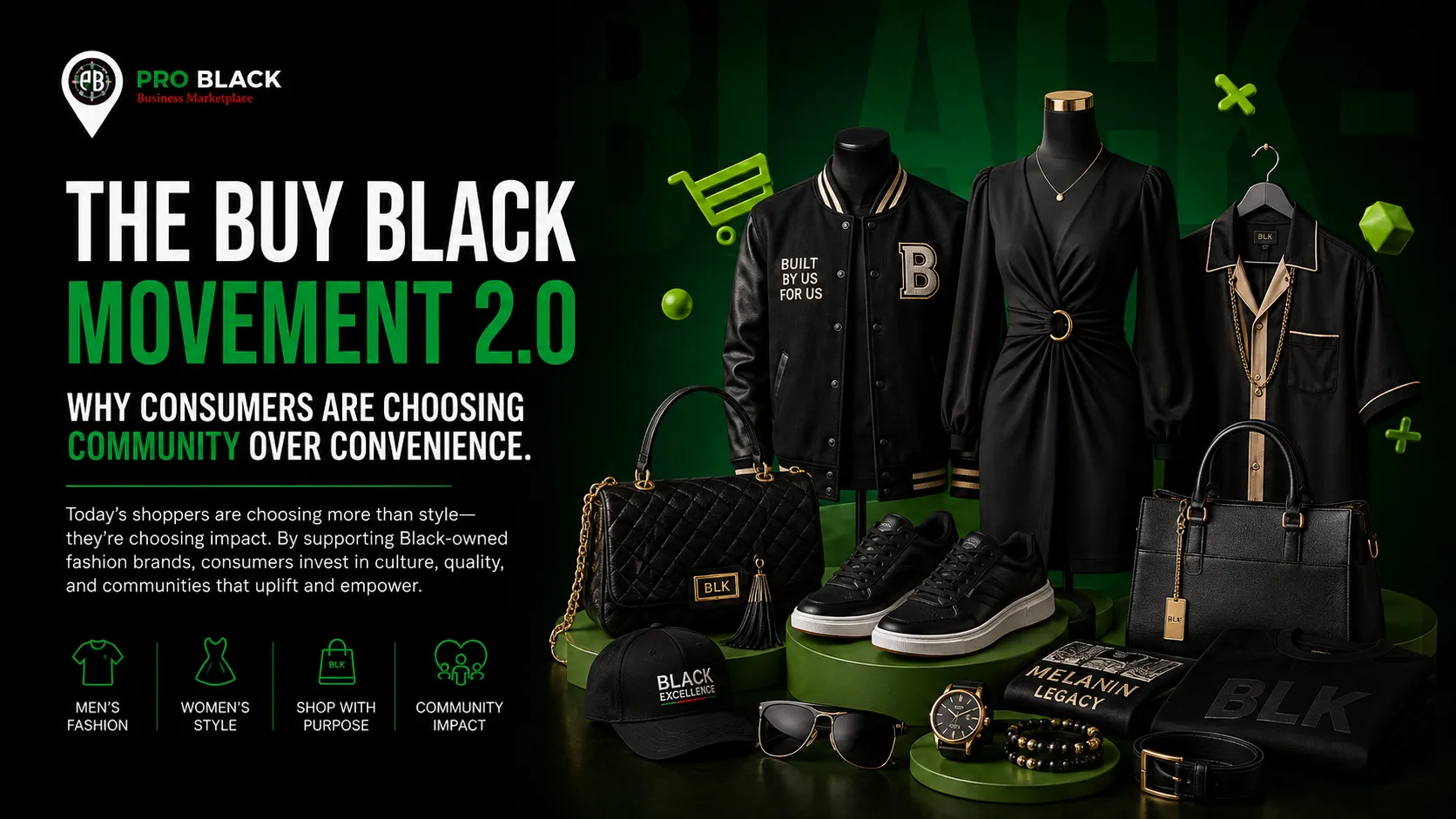
There was a time when supporting local meant little more than a bumper sticker sentiment. Today, it's a full-blown consumer philosophy and nowhere is that shift more visible than in the resurgence of the Buy Black movement. What started decades ago as a response to economic exclusion has evolved into something sharper, more organized, and far more digital. Call it Buy Black 2.0: a movement where convenience is no longer king, and community has taken the throne.
From Hashtag to Habit
The first wave of the modern Buy Black movement was largely reactive, sparked by moments of social unrest and amplified through hashtags and viral challenges. It got people talking. But talk doesn't build lasting economic infrastructure, and many early participants admitted their support faded once the news cycle moved on.
Buying Black 2.0 looks different. It's less about a single trending moment and more about a sustained, almost ritualistic habit. Consumers are building shopping lists, subscribing to newsletters, and joining apps specifically designed to route their dollars toward Black entrepreneurs year-round, not just during a designated awareness month.
Why Convenience Lost Its Grip
For years, convenience was the undefeated champion of consumer behavior. Same-day shipping, one-click checkout, and algorithm-curated recommendations trained shoppers to prioritize speed above almost everything else. So what changed?
Trust fatigue with big-box everything.
Consumers grew tired of faceless mega-corporations, opaque supply chains, and customer service that feels like talking to a wall. People want to know who made their candle, who roasted their coffee, who tailored their jacket.
A desire for visible impact : Shoppers increasingly want their spending to do something beyond fill a cart. Every dollar spent with a small, independent business has a multiplier effect on that owner's family, neighborhood, and local economy, an outcome that's much easier to see and feel than a donation to a faceless conglomerate.
Authenticity as currency : Social media has made entrepreneurs' stories part of the product itself. A hand-poured skincare line with a founder who shares her sourcing journey on Instagram creates an emotional connection that a shelf at a big-box store simply cannot replicate.
The Rise of Black Owned Small Businesses as Everyday Choices
Perhaps the most telling sign of this movement's maturity is how normalized it has become to seek out black owned small businesses as a first option rather than a special occasion. Directories, apps, and marketplace platforms have made discovery effortless shoppers can find a Black-owned bakery, bookstore, or boutique with the same ease they'd search for a national chain. This shift from "special initiative" to "default behavior" is what separates 2.0 from the movement's earlier iterations. It's no longer a favor extended during a hashtag campaign; it's simply how a growing number of consumers shop.
This normalization matters because it changes the economics. A business doesn't need viral fame to survive, it needs consistent, repeat customers who've made supporting Black entrepreneurship part of their regular routine, the same way they'd have a go-to dry cleaner or coffee shop.
Community Over Convenience, in Practice
What does "choosing community over convenience" actually look like day to day?
Waiting an extra day for shipping from an independent seller instead of next-day delivery from a marketplace giant.
Paying a bit more for handcrafted or small-batch goods, understanding the price reflects fair wages and quality materials rather than mass production.
Seeking out in-person markets and pop-ups instead of defaulting to online giants, because the experience of meeting the maker adds value convenience can't replicate.
Choosing service providers accountants, therapists, contractors through community recommendations rather than the first search result.
None of this is about boycotting convenience entirely. It's about consumers recalibrating what "worth it" means, and increasingly deciding that relationship and impact outweigh speed.
Technology Is Powering the Movement, Not Replacing Its Values
Ironically, the tools that once fueled convenience-obsessed shopping are now powering this community-first pivot. Apps that map nearby Black-owned businesses, e-commerce platforms built specifically for minority entrepreneurs, and social commerce features that let creators sell directly to followers have all lowered the barrier between consumer intent and consumer action. Buy Black 2.0 isn't anti-technology, its technology redirected toward relationship-building rather than just speed and scale.
What This Means for the Future of Commerce
Analysts have long predicted that values-based spending would grow, but the Buy Black movement's second act suggests something more specific: consumers are willing to trade real convenience for real connection, not just when it's easy, but as a standing preference. For entrepreneurs, this is an invitation to lean into story, transparency, and community engagement rather than trying to out-compete Amazon on shipping speed. For consumers, it's a reminder that where money flows shapes who thrives and that choosing intentionally, one purchase at a time, adds up to something much bigger than a single transaction.
The movement's staying power will depend on whether this behavior remains a habit rather than a trend. But if the current trajectory holds, Buy Black 2.0 isn't a moment it's a permanent recalibration of what consumers value most.
FAQs
Frequently Asked Questions
1. What is the Buy Black movement 2.0?
It's the modern, sustained evolution of the original Buy Black movement shifting from short-term, hashtag-driven support to a consistent, year-round consumer habit of prioritizing Black-owned businesses.
2. How is Buy Black 2.0 different from the earlier movement?
The earlier movement was often reactive, tied to specific social moments or awareness months. Buy Black 2.0 is proactive and habitual, supported by apps, directories, and everyday purchasing decisions rather than one-time campaigns.
3. Why are consumers prioritizing community over convenience?
Many shoppers are experiencing fatigue with impersonal, large-scale retail and want their spending to have a visible, local impact. Supporting community businesses feels more meaningful and trustworthy than optimizing purely for speed or price.
4. How can I find black owned small businesses near me?
Business directories, dedicated marketplace apps, and social media hashtags are popular starting points. Many cities also have local chambers of commerce or community organizations that maintain updated lists of Black-owned businesses.
5. Does supporting Black-owned businesses mean giving up convenience entirely?
Not necessarily. Many black owned small businesses now offer online ordering, fast local delivery, and subscription models so consumers can support community-driven commerce without sacrificing every convenience.
6. What impact does buying from Black-owned businesses have on local economies?
Money spent with local, independent businesses tends to recirculate within the community 6. What impact does buying from Black-owned businesses have on local economies? Money spent with local, independent businesses tends to recirculate within the community longer, supporting jobs, other local vendors, and neighborhood economic growth more directly than spending with large national chains.