
Table of Content
The phone is on silent. Your schedule is clear. You want to take a long shower, moisturize your skin, care for your hair, put on a fragrance you love, and simply slow down.
Then comes the familiar question: Which self-care products are actually worth using?
There are thousands of cleansers, body oils, masks, serums, lotions, hair treatments, fragrances, and wellness products competing for attention. Buying everything is expensive, and using too many products can sometimes make a routine more complicated rather than more enjoyable.
A better approach is to build your self-care routine around products that solve a specific need.
Black-owned beauty brands are an especially interesting place to start. The category now spans skincare, haircare, body care, cosmetics, fragrance, and wellness. Major retailers and beauty publications feature a growing range of Black-owned brands, including companies focused on textured hair, melanin-rich skin, inclusive makeup, fragrance, and body care.
This guide explains how to choose self-care products for a relaxing day without turning your routine into a 20-step project.
You will learn what to look for in skincare, haircare, body care, fragrance, and wellness products, how to compare options, common mistakes to avoid, and how to discover more Black-owned businesses along the way.
Key Takeaways
A good self-care routine does not require a large collection of products.
Start with your actual needs rather than buying products because they are trending.
Gentle cleanser, moisturizer, and sunscreen can form the foundation of a simple skincare routine.
Skin of color can be particularly prone to visible hyperpigmentation after inflammation, making gentle product selection important.
Haircare can turn an ordinary wash day into a relaxing personal-care ritual.
Body care, fragrance, and sensory products can make self-care feel more enjoyable without requiring complicated steps.
Supporting Black-owned businesses can make your shopping routine more intentional while helping you discover brands you may not encounter through conventional shopping.
Why Black-Owned Beauty Products Fit Naturally Into Self-Care
Self-care is personal.
For one person, it might mean an elaborate skincare routine. For another, it might be washing and deep-conditioning their hair, applying body lotion after a shower, or putting on a favorite fragrance before going to bed.
That is why there is no universal list of "must-have" self-care products.
What makes Black-owned beauty particularly worth exploring is the breadth of products available. Today's Black-owned beauty category includes facial skincare, body products, textured-hair care, makeup, fragrance, shaving products, and wellness-focused offerings.
For example, Sephora's current Black-owned beauty collection includes brands across skincare, haircare, makeup, fragrance, and body-related categories.
The important point is not that every Black-owned product is automatically better.
It is that there is a broad selection of businesses creating products for different preferences, skin tones, hair textures, lifestyles, and personal-care needs.
That gives shoppers more choices.
And when you use a marketplace or directory designed to make those businesses easier to discover, you can spend less time searching through disconnected websites.
The Best Self-Care Products to Build Your Routine
Before buying anything, divide your routine into a few simple categories.
| |||||||||||||||||||||||
|---|---|---|---|---|---|---|---|---|---|---|---|---|---|---|---|---|---|---|---|---|---|---|---|
You do not need something from every category. Think of the table as a menu rather than a shopping list. If your skin is dry, prioritize moisturizing products. If your hair needs attention, spend more of your self-care time there. If you mainly want to relax, fragrance and bath products may matter more than another facial serum. The best routine is the one you will actually enjoy using. | |||||||||||||||||||||||
Skincare: Start With the Basics
A self-care day can be a great opportunity to give your skin some attention, but more products do not necessarily mean better skincare.
The American Academy of Dermatology recommends a straightforward foundation: cleansing, moisturizing, and daily sun protection. It also advises avoiding harsh scrubbing because irritation can damage the skin barrier.
1. Gentle Cleanser
Start with a cleanser appropriate for your skin type.
A gentle cleanser can remove dirt, oil, makeup, and other buildup without unnecessarily irritating your skin.
Avoid assuming that a product needs to leave your skin feeling extremely tight or "squeaky clean."
That feeling is not a reliable sign that your skin is healthier.
2. Moisturizer
Moisturizer is one of the simplest ways to make a skincare routine feel more comfortable.
Apply it according to your skin's needs. People with oily skin may prefer lightweight formulas, while people with dry skin may prefer creams or richer formulations.
The AAD also recommends applying moisturizer to damp skin to help retain moisture.
3. Sunscreen
Sunscreen belongs in a self-care routine even if you are primarily thinking about beauty.
Dermatologists recommend sunscreen for people with all skin tones. In darker skin, visible light can contribute to hyperpigmentation, and tinted sunscreens containing iron oxide may provide additional protection against visible light.
This matters because post-inflammatory hyperpigmentation can be particularly noticeable in skin of color.
If acne, irritation, or another skin issue leaves a dark mark, the discoloration can sometimes remain after the original problem has disappeared.
4. Treatment Products
Serums, exfoliants, masks, and targeted treatments can be useful, but they should have a reason for being in your routine.
Ask yourself:
What problem am I trying to address?
If you cannot answer that question, you may not need the product.
This is especially important when combining active ingredients. Introducing several new products at once makes it difficult to determine what is helping and what may be irritating your skin.
Haircare Can Be Part of Your Self-Care Day
For many people, haircare is not just maintenance. It is a ritual.
A wash day can become a genuine self-care experience when you stop treating every step as a chore and give yourself time to do it properly.
Black-owned haircare brands have played an important role in creating products specifically for textured hair, curls, coils, and different scalp needs. Current Black-owned beauty collections include dedicated haircare brands alongside skincare and makeup companies.
Build Your Haircare Routine Around Your Hair
Instead of choosing products because they are labeled "natural" or "clean," consider what your hair actually needs.
You might look for:
A gentle shampoo for regular cleansing
A moisturizing conditioner
A deep-conditioning treatment
A leave-in conditioner
A curl cream or styling product
A scalp treatment
A lightweight oil or serum
Your routine does not need all seven.
For example, someone with dry curls may prioritize a moisturizing conditioner and leave-in product. Someone focused on scalp care may spend more time choosing a cleanser and scalp treatment.Make Wash Day Feel Different
Self-care is partly about the experience.
Put your products somewhere easy to reach. Use a towel or head wrap you enjoy. Give yourself enough time that you are not rushing through every step.
The difference can be surprisingly simple.
You are not necessarily buying more products. You are creating a better ritual around the products you already use.
Body Care Products for a Relaxing Routine
Body care is often easier to overlook than facial skincare, yet it can make a self-care day feel complete.
Consider a simple sequence:
Shower or bath → gentle cleansing → moisturizer → body oil if desired → comfortable clothing
Body Wash
Choose a body cleanser based on how your skin feels rather than how dramatic the packaging looks.
If your skin tends to feel dry or irritated, a gentle formula may be preferable to an aggressive scrub.
Body Lotion or Body Butter
Apply moisturizer after bathing, particularly while the skin is still slightly damp.
Body butter can be useful when you want a richer texture, while lotion may feel lighter for everyday use.
Body Oil
Body oil can add another sensory element to the routine.
It can also help seal in moisture when applied appropriately, but you do not need multiple moisturizing products simply because they are available.
Choose the texture you enjoy.
That matters because self-care is supposed to be sustainable, not another complicated obligation.
Exfoliation
Exfoliating can feel satisfying, but aggressive scrubbing is not always better.
If a scrub leaves your skin burning, raw, or uncomfortable, that is a warning sign.
Your self-care routine should leave your skin feeling cared for, not punished.
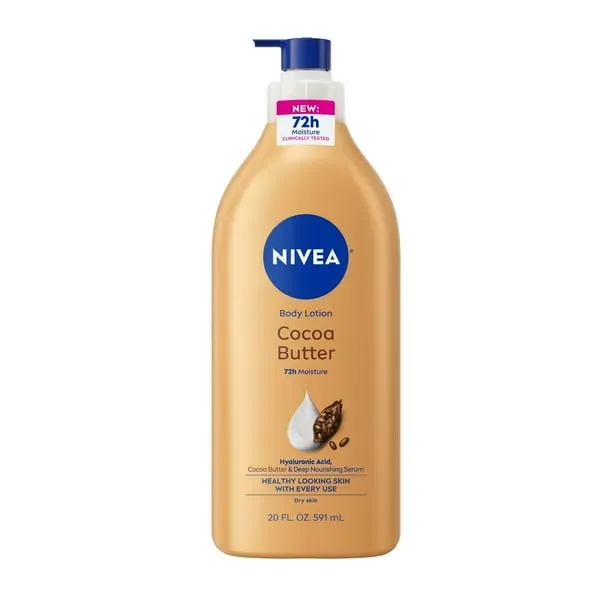
Nivea Cocoa Butter Body Lotion for Dry Skin
Fragrance and Sensory Self-Care
Not every self-care product needs to perform a traditional skincare function.
Sometimes the purpose is simply to create an atmosphere you enjoy.
A fragrance, body mist, scented body product, or other personal-care item can become part of the emotional side of your routine.
Black-owned fragrance brands have also become a more visible part of the broader beauty category. Current retailer collections include Black-owned perfume and fragrance businesses alongside skincare and haircare companies.
When choosing fragrance, consider:
How strong you want the scent to be
Whether you prefer perfume, body mist, or scented body care
Which fragrance families you enjoy
Whether the product will be used at home or outside
Whether anyone around you is sensitive to fragrance
If fragrance causes irritation, avoid applying it directly to sensitive areas.
And remember that fragrance is optional.
A self-care routine can be completely fragrance-free.
How to Choose Self-Care Products
The easiest way to avoid unnecessary purchases is to make your selection process more deliberate.
Step 1: Identify Your Main Goal
Pick one or two priorities.
Maybe you want:
Better hydration
A simpler skincare routine
A relaxing bath
A dedicated haircare day
Better body care
A new fragrance
Products from Black-owned businesses
Having a goal immediately narrows your options.
Step 2: Understand Your Skin and Hair
Know the basics before choosing ingredients.
For skin, consider whether you are:
Dry
Oily
Combination
Sensitive
Acne-prone
For hair, consider:
Texture
Porosity if relevant to your routine
Scalp condition
Dryness
Breakage
Styling needs
You do not need a scientific diagnosis to start making better purchasing decisions.
You simply need to pay attention to how your skin and hair respond to products.
Step 3: Read the Ingredient List
Marketing language can be useful, but the ingredient list tells you more about what is actually inside the product.
Be particularly careful with products that make dramatic promises.
For cosmetics sold in the United States, the FDA states that cosmetic labeling claims must be truthful and not misleading. Products marketed to treat or prevent disease can fall under drug regulations rather than being treated simply as cosmetics.
That is one reason to be skeptical of extreme promises such as instant transformation, permanent cures, or guaranteed results.
Step 4: Introduce New Products Gradually
Do not replace your entire routine on the same day.
If you introduce five new products and your skin becomes irritated, you have no easy way to identify the problem.
A gradual approach is easier to manage.
Step 5: Check the Brand, Not Just the Product
When supporting Black-owned businesses, look beyond the front of the package.
Check the company's website, product information, ingredients, return policy, customer reviews, and business details.
Directories and marketplaces can make this discovery process easier by bringing businesses into one searchable environment.
A Simple Self-Care Routine You Can Actually Maintain
You do not need a full weekend to have a meaningful self-care day.
Here is one practical example.
Morning
Start with your normal skincare routine.
Cleanse gently.
Apply your treatment product if you use one.
Moisturize.
Apply broad-spectrum sunscreen.
Take a few minutes before moving into the rest of your day.
The AAD recommends applying skincare products in a logical order, generally starting with cleansing, followed by treatment products and then moisturizer and/or sunscreen.
Afternoon
Make this the body-care or haircare portion.
Take a longer shower. Wash and condition your hair. Use a body moisturizer afterward.
If you enjoy exfoliation, keep it gentle and appropriate for your skin.
Evening
This is where you can make the routine more personal.
Put on comfortable clothes. Apply a favorite body lotion or fragrance if you use one. Make a warm drink. Read. Journal. Watch something you enjoy.
The objective is not to complete a checklist.
It is to create a period of time where you are not constantly rushing to the next responsibility.
How Much Should You Spend on Self-Care Products?
There is no single correct budget.
A simple routine can be inexpensive, while a collection of premium skincare, fragrance, and haircare products can become costly very quickly.
A useful approach is to divide your budget by priority.
Do not assume that a higher price automatically means a better product. Price can reflect ingredients, packaging, positioning, distribution, formulation, or branding. Your goal should be value for your specific needs. | ||||||||||||
|---|---|---|---|---|---|---|---|---|---|---|---|---|
Common Mistakes to Avoid
Buying Products Because They Are Trending
A product can be popular and still be wrong for your skin or hair.
Popularity is not personalization.
Starting Too Many Products at Once
This is one of the easiest ways to create confusion.
Introduce new products one at a time when possible.
Treating Irritation as Proof That a Product Is Working
Burning, severe redness, or persistent irritation should not automatically be interpreted as evidence that a product is effective.
The AAD specifically advises gentle skincare and notes that irritation from products can contribute to dark spots in darker skin tones.
Assuming "Natural" Means Risk-Free
Plant-based ingredients can still cause irritation or allergies.
Read the ingredient list and pay attention to how your skin reacts.
Ignoring Sun Protection
Melanin provides some natural protection, but it does not eliminate the need for sun protection.
The AAD recommends sunscreen for people with brown and Black skin, particularly because UV and visible light can contribute to hyperpigmentation.
Buying a Product Without Checking the Brand
Before purchasing, look for clear product information, ingredient details, business information, customer feedback, and reasonable policies.
A beautiful package should not be the only reason you trust a product.
Where to Discover More Black-Owned Beauty Products
Finding individual Black-owned beauty businesses can sometimes require searching across multiple platforms.
That is where a dedicated marketplace can be useful.
Pro Black is designed to connect shoppers with verified Black-owned businesses across different categories. Its marketplace includes beauty, skincare, haircare, body care, fragrances, and other products.
Instead of searching randomly, you can use a marketplace to explore businesses by category and location.
Browse Black-Owned Businesses on Pro Black
If you are building your next self-care routine, consider choosing one product category and discovering a new Black-owned business within it.
That could be skincare this month and haircare next month.
Small changes can make intentional shopping part of your normal routine rather than something reserved for a particular holiday or awareness month.
How Pro Black Can Help You Discover Black-Owned Brands
Pro Black gives shoppers a central place to discover verified Black-owned businesses, products, and services.
Its platform is built around business discovery, shopping, and connecting customers with Black-owned businesses across the United States.
For beauty shoppers, that can make the search process simpler.
Instead of asking, "Where can I find Black-owned beauty products?" you can begin with a category and explore available businesses.
You can also browse Black-owned businesses by location, making it easier to discover local businesses as well as brands that ship products more broadly.
Start Exploring Black-Owned Products
The goal is not to replace every store you already use.
It is to make Black-owned businesses easier to find when you want to support them.
A Self-Care Shopping Checklist
Before checking out, ask yourself:
What specific need does this product address?
Is it appropriate for my skin or hair type?
Have I checked the ingredients?
Am I buying it because I need it or because it is trending?
Does the product fit my current routine?
Have I checked reviews and product information?
Is the business transparent about what it sells?
Can I realistically afford to repurchase it?
Am I choosing this brand intentionally?
If you can answer these questions comfortably, you are much more likely to build a routine that works for you.
Final Thoughts
The best self-care routine is not necessarily the most expensive, complicated, or Instagram-worthy one.
It is the routine that makes sense for your skin, hair, body, budget, and lifestyle.
Black-owned beauty businesses offer plenty of options across skincare, haircare, body care, fragrance, makeup, and wellness. The category is broad enough that you can start small and gradually discover products that fit your preferences.
Start with the basics.
Choose products for a clear reason. Introduce new items gradually. Pay attention to your skin and hair. Avoid exaggerated promises. Most importantly, make the routine enjoyable.
Whether your perfect self-care day involves a 10-minute skincare routine or an entire afternoon dedicated to hair, body care, and relaxation, the products should support the experience rather than become another source of stress.
And when you choose Black-owned businesses along the way, your personal shopping routine can also become a practical way to discover and support entrepreneurs within the community.
3. FAQ Section
Frequently Asked Questions
What are the best self-care products for a simple routine?
Start with products that address your basic needs. For skincare, that generally means a gentle cleanser, moisturizer, and broad-spectrum sunscreen. You can then add haircare, body care, fragrance, or targeted treatments based on your preferences.
Are Black-owned beauty products only for Black consumers?
No. Black-owned beauty brands create products for a wide range of consumers. Some focus specifically on the needs of melanin-rich skin or textured hair, while others formulate products intended for everyone.
What skincare products should people with darker skin consider?
A gentle cleanser, moisturizer, and sunscreen are useful starting points. People with darker skin may also want to pay attention to products that minimize irritation because inflammation can contribute to post-inflammatory hyperpigmentation.
Do people with Black or brown skin need sunscreen?
Yes. Dermatologists recommend sun protection for all skin tones. The AAD notes that visible light can contribute to hyperpigmentation in darker skin tones and recommends appropriate sunscreen use.
How many self-care products do I actually need?
There is no required number. A simple routine can include only a few products. Start with the basics and add products only when they serve a specific purpose.
How can I find trustworthy Black-owned beauty brands?
Look for clear business information, ingredient lists, product details, customer reviews, and transparent policies. Dedicated marketplaces such as Pro Black can also make it easier to discover Black-owned businesses in one place.
Should I try several new skincare products at the same time?
It is generally better to introduce new products gradually. If several products are introduced simultaneously and your skin reacts, identifying the cause becomes more difficult. The AAD also cautions that using too many products can cause irritation.
Ready to discover something new?
Explore Black-owned beauty, skincare, haircare, and wellness businesses on Pro Black and find products that fit your self-care routine.