Table of Content
Introduction
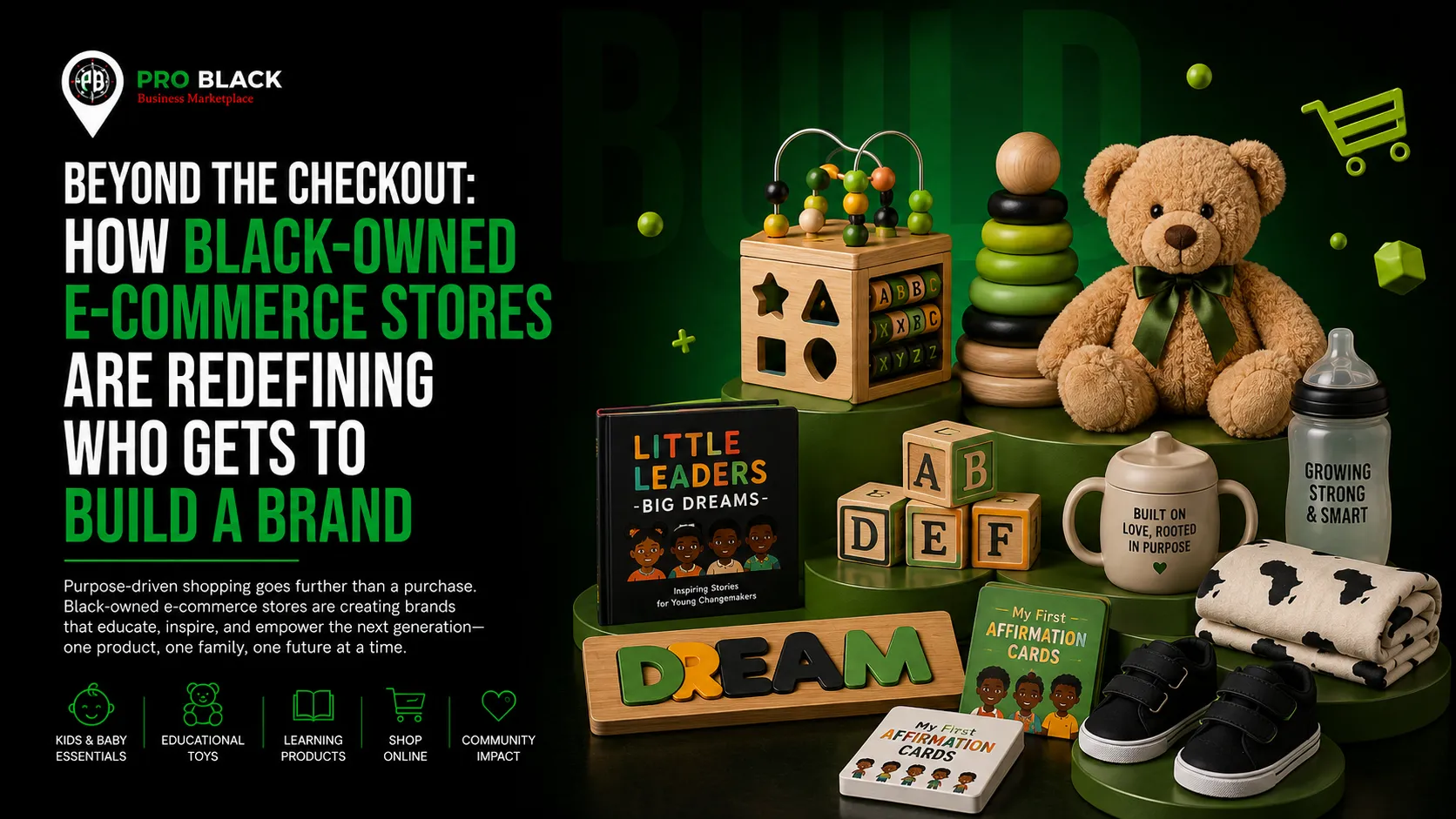
For a long time, the story of e-commerce success has followed a familiar script: a founder with access to capital, a warehouse, and a fast-moving ad budget builds a brand, scales it, and cashes out. But a quieter, more powerful shift has been happening beneath the surface of that narrative. Across nearly every category beauty, fashion, home goods, food, wellness a new wave of founders is proving that building a brand isn't just about who has the most resources. It's about who has the clearest vision, the deepest community trust, and the courage to start anyway. Nowhere is this shift more visible than in the rise of black owned eCommerce stores, which are not just selling products but redefining the very idea of who gets to build, own, and scale a brand in the digital economy.
This isn't a checkout-page trend. It's a structural change in who holds economic power online and it's worth understanding why.
Traditional retail was built on gatekeeping: shelf space controlled by a handful of buyers, credit lines controlled by a handful of banks, and media attention controlled by a handful of publishers. Black entrepreneurs were routinely locked out of all three. E-commerce didn't erase those barriers overnight, but it did something important it lowered the cost of entry. A Shopify store, a Instagram following, and a compelling product story can now compete with brands that once needed millions in funding just to get noticed.
This is the real story behind the growth of independent online retail: founders who were denied a seat at the traditional table simply built their own table, and then invited everyone else to sit at it.
Building Brands With Purpose, Not Just Products
What makes many of these businesses stand out isn't just what they sell it's why they sell it. Many founders are building brands rooted in cultural authenticity, community accountability, and a refusal to dilute their identity for mainstream approval. Skincare lines formulated for textures and tones that were historically ignored. Fashion labels that tell a specific cultural story instead of a generic one. Home and lifestyle brands that center joy, heritage, and craftsmanship.
This is precisely where black owned eCommerce stores are having their biggest impact. Rather than mimicking existing retail giants, many of these founders are building something the market hasn't seen before brands where representation isn't a marketing campaign, it's the foundation.
Community as a Growth Engine
One of the most striking differences in this new generation of digital entrepreneurship is how community-driven the growth strategy is. Instead of relying purely on paid advertising, many founders are growing through word of mouth, social proof, and intentional community-building customers who don't just buy once, but return, refer, and advocate.
This "buy black" movement, especially online, has evolved from a hashtag into an actual purchasing habit for millions of consumers who want their spending to reflect their values. Directories, marketplaces, and social platforms dedicated to spotlighting these businesses have made it easier than ever for shoppers to intentionally choose where their money goes and that intentionality is fueling real, sustainable revenue growth.
The Challenges That Still Exist
It would be dishonest to paint this shift as a fully solved problem. Access to funding remains disproportionately difficult. Studies have repeatedly shown that Black founders receive a smaller share of venture capital and small business loans relative to their share of entrepreneurship. Many of these brands are bootstrapped, self-funded, or built on razor-thin margins which makes their growth even more remarkable, but also more fragile.
Supply chain costs, ad platform algorithms that don't always favor smaller accounts, and the sheer difficulty of standing out in a crowded digital marketplace are real obstacles. The success stories are inspiring, but they exist alongside founders who are still fighting for visibility, funding, and fair treatment from platforms and payment processors alike.
Why Representation in E-Commerce Matters Beyond the Transaction
When a consumer chooses to shop from a Black-owned business online, the impact ripples outward. It's not just a transaction it's a vote of confidence in a founder's vision, a contribution to community wealth-building, and often a way of accessing products and perspectives that mainstream retail has historically overlooked.
This is also why more shoppers are actively seeking out black owned eCommerce stores rather than stumbling onto them by accident. Consumers increasingly want to know the story behind a brand who built it, what it stands for, and where their money actually goes. That curiosity has turned into a measurable market force, with entire platforms and search behaviors now built around intentional, values-driven shopping.
What the Future Looks Like
The next phase of this movement likely won't be about proving that these businesses can compete that's already been demonstrated. It will be about scale, sustainability, and structural support: better access to capital, more equitable ad platform algorithms, stronger logistics partnerships, and continued consumer commitment that goes beyond a single shopping holiday or awareness month.
As more founders build multi-channel brands, expand into retail partnerships, and reinvest in their communities, the definition of who gets to build a lasting brand keeps expanding. The checkout page was never the finish line it was always just the beginning of a much bigger story about ownership, equity, and economic self-determination.
Conclusion
The rise of independent, community-rooted online retail is more than a passing trend it's a redefinition of entrepreneurship itself. Every purchase from a values-driven digital brand is part of a larger movement reshaping who holds power, visibility, and opportunity in e-commerce. As more shoppers seek out and support these businesses, the impact will keep extending far beyond the checkout button.
FAQs
1. What are black owned eCommerce stores? They are online retail businesses founded, owned, and operated by Black entrepreneurs, spanning categories like beauty, fashion, food, wellness, and home goods.
2. Why is it important to support these businesses specifically? Supporting them helps address longstanding gaps in access to capital and market visibility, while also contributing directly to community wealth-building and economic equity.
3. How can I find black owned eCommerce stores to shop from? Many directories, social media hashtags, and dedicated marketplaces curate lists of verified Black-owned online businesses across nearly every product category.
4. Are these brands more expensive than mainstream retailers? Pricing varies widely by brand and category, just as it does across any independent or small-business retail sector. Many are competitively priced with larger retailers.
5. What challenges do these entrepreneurs commonly face? Common challenges include limited access to venture capital and loans, algorithm visibility on ad platforms, and the general difficulty of scaling a bootstrapped online business.
6. How has social media impacted the growth of these stores? Social media has become a major growth engine, allowing founders to build community, generate word-of-mouth referrals, and reach customers without relying solely on paid advertising.